
Cooking with wine means different things to different people. To many of us it conjures glamorous images of stirring a risotto milanese with a glass of white Burgundy wine in hand, fully made-up atop kitten heels. Others envision themselves making a red wine one with a big bold Barolo in hand while simultaneously using the bottle to pour into the rice. Not for me!
Years of burns and scrapes in test kitchens, cafes and cooking schools have programmed me to cook stone cold sober. The military style chefs at Le Cordon Bleu where I did my Grand Diplome in pastry and cuisine did not predispose me to drinking while (or before) cooking either. I foolishly had a pint of beer at The Angel in Marylebone once before a classe pratique and I got an earful.
I fully admit that when I cook I wear an old t-shirt, comfortable pants, an apron and plastic Birkenstocks.I will change if you do come over for dinner but I will use cook-ahead recipes and will seldom resort to “show-cooking”.
When I ran the cookery school at Alambique in Madrid, one of my responsibilities was running the cooking classes for the joint club they had with Bodegas CVNE from La Rioja. The club wine was mainly a Rioja Alavesa Reserva named Viña Real del Alambique which you ordered by the case. The membership included cooking classes and discounts with the bodega and school’s shop. The wine was 95% tempranillo and 5% graciano and the tasting notes referred to cherries, cocoa and vanilla which, to my untrained palate, seemed a far stretch. At first the responsibility was daunting: the club members were very posh and knew not only about wine but also food. After a while I slowly warmed-up to the members and the idea of expanding my classes.
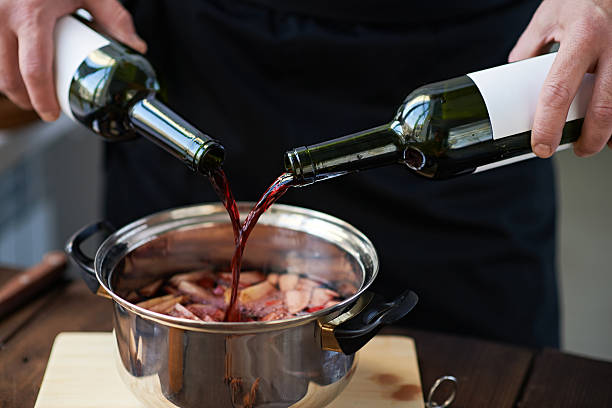
For the wine club I developed many recipes: red wine risotto, red wine granita, eggs in red wine, cockles with garlic and white wine, foie gras (which uses cognac and port wine). The food was all paired with wines from the winery. It was a fun class that always ran late, with an air of warmth and conviviality.
When using wine in cooking, it’s important to consider how its sweetness, tannins, and acidity become more concentrated. However, as Harold McGee deftly explains in his everyone-who-is-bit-of-a-nerd-needs-a-copy “On Food and Cooking”, the tannins are mellowed once they fuse with protein-rich foods. In cooking most recipes wines need to be reduced to evaporate the alcohol; it is good to note that an unbalanced wine will leave an unpalatable reduction. This is not to say that you need to invest in an expensive bottle but definitely don’t scrimp or resort to wine labelled “cooking wine” something common in Spain and the USA. The team over at Wine Folly have a great chart that shows what wines to cook with. I will defer to them about this but I know a bit about what techniques they are most suited for. One of the most popular wines for cooking is sherry (fino, manzanilla, amontillado and oloroso).

There are many different techniques for cooking with wine, so let’s explore the most common ones.
Braising: This is the easiest method, similar to making a stew but with less liquid. It involves slow cooking tougher cuts of meat to tenderise them, while the liquid reduces and the flavours intensify. A classic example is French coq au vin, where chicken is braised in a mixture of fruity red wine, vegetables, and aromatic herbs like a bouquet garni (essentially a bunch of herbs tied in leek leaves). Braises and casseroles normally use red or dry white wine.
Deglazing: Another simple option is deglazing. After searing meat or chicken livers, you remove them from the pan and add wine. I am partial to oloroso sherry here. By scraping the browned bits from the pan, you create a flavorful reduction as the wine reduces (the alcohol evaporates) resulting in a lovely wine jus. Vinegar can also be used for deglazing since it’s essentially wine that has gone off vin aigre (sour wine). One of my favourite recipes is organic chicken livers with a reduction of sherry vinegar. Sherry vinegar adds a complexity of aromatic nuts and a pleasant acidity that complements the livers. The addition of the liquid to the hot pan helps to remove any flavourings left behind whilst sealing the meat. These brown bits of flavouring are key to any good sauce.
Poaching: Poaching fruit in red wine with sugar, a tempranillo works well, or a sweet wine like port is also easy and produces beautifully coloured pears or apples. They can be served with a luscious mascarpone or ice cream.
Glazes and Sauces: By reducing wine and adding another ingredient like melted quince paste, you can create a glaze. This glaze works well on roasted pork belly, for example. You can make a myriad of sauces with wine. Oeufs en matelote or eggs in red wine sauce is a classic dish that although it has fallen out of favour (like the more delicious but more complicated oeufs en meurette, which has lardons and mushrooms and which only has 1,144 entries under #oeufsenmeurette) deserves to be revived. In this retro dish you serve poached eggs covered in a red wine sauce that is thickened by a roux (butter and flour). Our distancing from traditional French cuisine towards Asia and Latin America has in my opinion reduced the encounters with traditional wine in cooking and has moved us to reaching for Shaoxing rice wine, mirin and other types of wines and spirits made with rice.
Direct Use: Adding wine directly to food is another option, such as adding a dash of fino or manzanilla sherry to a consommé. My father loves this use, but instead of consommé, he adds it to chicken soup made in a pressure cooker. You can also make a lovely mulled wine sorbet a la Delia Smith, serve a simple vanilla ice cream with Pedro Ximenez sweet wine or spike your tiramisu with Marsala like Italians do.
A lovely Champagne gelatine with fruits suspended is also a good use of a sparkling wine.
Marinating: This helps tenderise meats and adds a layer of flavour. This also adds an intense depth of flavour in dishes such as coq au vin or a classic bourguignon where meats are marinated 24 hours prior to cooking.
Essentially the acid in the wine denatures the proteins but to be honest I find that salting meat in advance is an easier (read lazier) and cheaper proposition.
Steaming: Replacing water with wine for steaming is another way to use wine. For example when you use wine with aromatics like herbs and garlic to steam open mussels, clams or cockles.. The wine reduces slightly as the mussels open and adds that distinct taste of sophistication to the simple molluscs.
Whenever I have leftover wine that is a couple of days old that I am not going to drink I freeze it into 1 cup portions using Souper cubes (a new favourite kitchen tool). These cubes allow for easy freezing and portioning. After they are frozen I pop them out and put them into a clearly labelled freezer bag. Labelling is key here unless you are adept at deciphering frozen cubes that all look the same colour as some of your stocks.
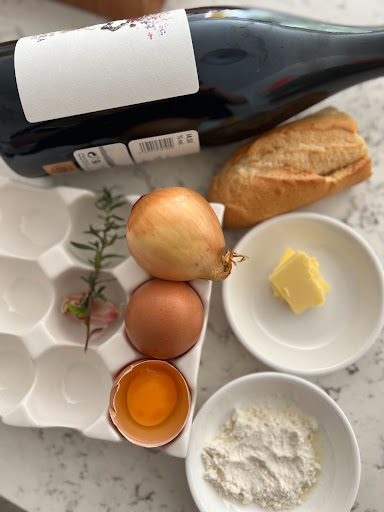
This simple yet sophisticated recipe is one you are able to pull together from a very basic pantry.
Simple Eggs in Red Wine Sauce
Oeufs en Matelote
Ingredients
For 6 people:
- 6 free-range eggs
- ½ l. dry red wine
- 1 medium onion
- 1 clove garlic
- 1 sprig of aromatic herbs
- Salt pepper
- 15g flour
- 15g butter
- 6 croutons of fried bread
Method
Boil the aromatic herbs and onion in the water and wine for about 20 minutes, remove the herbs and onion and poach the eggs, strain.
Knead the flour and butter, add it to the strained liquid from poaching the eggs, beat with a whisk until it has a velvety consistency.
Brown the sliced bread in a little oil and butter, rub them with the garlic clove.
Serve hot on a round tray, placing the eggs on the bread and coating them with the red wine sauce. Sprinkle with chives or chopped parsley and serve hot.
Article by Blanca Valencia
 WINE SPIRIT WOMEN
One Comment Add yours